

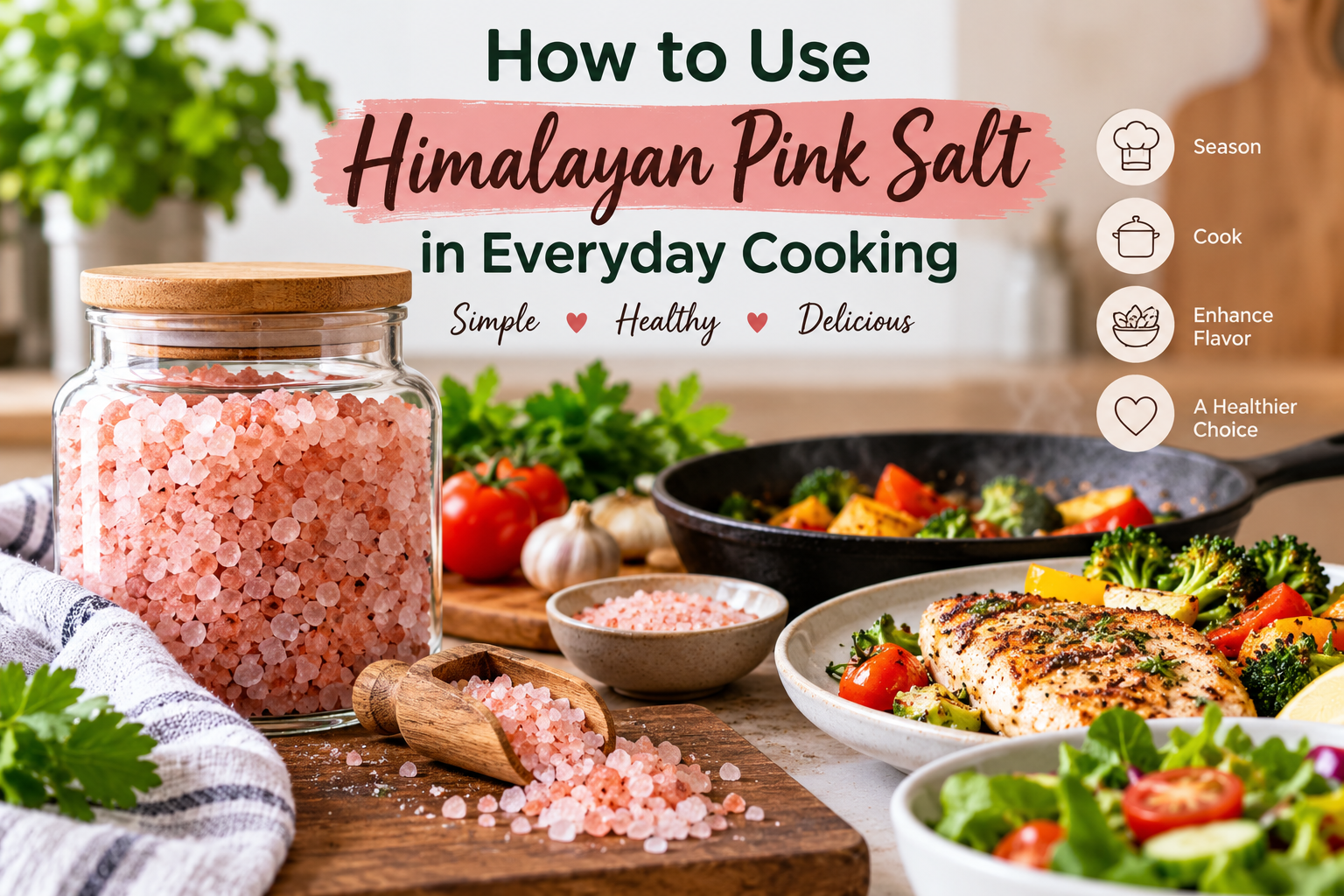
Himalayan pink salt is more than a colorful finishing ingredient. With its distinctive pink crystals, mild mineral character, and variety of grain sizes, it can be used in many of the same ways as regular salt—from seasoning vegetables and meats to finishing salads, eggs, soups, and homemade snacks.
If you have a bag or grinder of Himalayan pink salt sitting in your kitchen and aren’t sure how to use it, you’re in the right place.
The easiest way to start cooking with Himalayan pink salt is to use it as you would other culinary salt, while adjusting the amount based on the crystal size and your recipe.
In this guide, you’ll learn how to use Himalayan pink salt in everyday cooking, which foods pair well with it, how to use coarse and fine grains, and how to season food without overdoing the sodium.
What Is Himalayan Pink Salt?
Himalayan pink salt is a type of rock salt harvested from salt deposits in Pakistan’s Punjab region. Its naturally pink color comes from trace minerals and other compounds present in the salt.
Compared with highly refined table salt, Himalayan pink salt is generally less processed and is available in different textures, including fine, medium, and coarse crystals.
The different grain sizes make it useful for different cooking purposes.
Fine Himalayan pink salt is convenient for cooking, baking, sauces, and seasoning dishes evenly.
Coarse Himalayan pink salt works particularly well in salt grinders, marinades, roasted foods, and as a finishing salt.
Despite differences in color and processing, Himalayan pink salt is still salt and contributes sodium to your diet. The American Heart Association notes that different culinary salts vary in texture and processing, but their sodium content is generally similar.
Why Use Himalayan Pink Salt for Cooking?
Many home cooks choose Himalayan pink salt because of its:
- Natural pink color
- Variety of crystal sizes
- Distinctive texture
- Convenient use in salt grinders
- Versatility in cooking
- Appeal as a minimally processed ingredient
For many people, the biggest advantage is simply culinary: it looks attractive and works well as an everyday seasoning.
It can add a salty flavor to food while also giving dishes a different visual presentation, especially when used as a finishing salt.
15 Easy Ways to Use Himalayan Pink Salt in Everyday Cooking
1. Season Eggs
Eggs are one of the easiest foods to start with.
Add a small pinch of fine Himalayan pink salt to:
- Scrambled eggs
- Omelets
- Fried eggs
- Boiled eggs
- Egg sandwiches
- Breakfast burritos
For fried or boiled eggs, try finishing them with a small pinch of coarse Himalayan pink salt for added texture.
2. Season Roasted Vegetables
Himalayan pink salt works especially well with roasted vegetables.
Try it with:
- Potatoes
- Sweet potatoes
- Carrots
- Broccoli
- Cauliflower
- Zucchini
- Bell peppers
- Brussels sprouts
- Asparagus
For a simple roasted vegetable seasoning, combine Himalayan pink salt with black pepper, garlic, olive oil, and your favorite dried herbs.
The American Heart Association recommends using herbs, spices, citrus, and other flavorful ingredients to add flavor while reducing reliance on salt.
3. Use It on French Fries and Potato Wedges
Freshly cooked potatoes pair naturally with salt.
After baking or air-frying your potatoes, add a light sprinkle of Himalayan pink salt while they are still hot.
For extra flavor, combine it with:
- Black pepper
- Garlic powder
- Paprika
- Dried parsley
- Onion powder
A salt grinder filled with coarse Himalayan salt can make it easy to control how much you add.
4. Season Chicken
Himalayan pink salt can be incorporated into chicken seasoning blends.
For a simple homemade seasoning, combine:
- Himalayan pink salt
- Black pepper
- Garlic powder
- Paprika
- Onion powder
- Dried oregano
Rub a small amount onto chicken before roasting, grilling, pan-searing, or air-frying.
Remember that packaged marinades, sauces, and seasoning mixes can also contain sodium, so check the Nutrition Facts label when you’re trying to control your total sodium intake. The FDA recommends using Nutrition Facts labels to monitor sodium intake.
5. Season Steak and Other Meats
Coarse Himalayan pink salt can work well as part of a steak seasoning.
Before cooking, combine a moderate amount of salt with black pepper and other seasonings.
For thicker cuts, allow the seasoning time to distribute across the surface before cooking.
You can also use Himalayan pink salt when seasoning:
- Beef
- Lamb
- Pork
- Turkey
- Burgers
- Meatballs
The key is moderation. More salt does not necessarily mean more flavor.
6. Add It to Homemade Soups
A small amount of Himalayan pink salt can help balance the flavor of homemade soups.
It works well in:
- Chicken soup
- Vegetable soup
- Lentil soup
- Tomato soup
- Potato soup
- Bean soup
- Beef soup
Add a small amount during cooking and taste before adding more.
This approach gives you better control than automatically adding a large amount of salt at the beginning.
7. Season Rice and Grains
Rice, quinoa, couscous, and other grains can taste bland without seasoning.
A small amount of Himalayan pink salt can be added during cooking or after preparation.
Try combining it with:
- Garlic
- Black pepper
- Parsley
- Cilantro
- Lemon juice
- Olive oil
This can create a simple base for grain bowls, roasted vegetables, chicken, or seafood.
8. Use It on Salads
Himalayan pink salt can be used in homemade salad dressings.
Try this simple combination:
- Olive oil
- Fresh lemon juice
- A small pinch of Himalayan pink salt
- Black pepper
- Dried or fresh herbs
Whisk the ingredients together and drizzle over your salad.
Fresh herbs, citrus, and vinegar can provide additional flavor without relying entirely on salt.
9. Season Avocado Toast
Avocado toast is another easy place to use Himalayan pink salt.
Spread mashed avocado over toasted bread and add:
- A small pinch of Himalayan pink salt
- Black pepper
- Lemon juice
- Red pepper flakes
You can also add an egg or sliced tomato for a more substantial breakfast.
10. Use It With Seafood
Himalayan pink salt pairs well with many seafood dishes.
Try it with:
- Salmon
- Shrimp
- Cod
- Tilapia
- Tuna
- Scallops
For a simple seafood seasoning, combine Himalayan pink salt with lemon zest, black pepper, garlic, and parsley.
The combination of salt and acidity from lemon can make seafood taste brighter without requiring a heavy amount of seasoning.
11. Season Homemade Popcorn
Instead of reaching for heavily seasoned packaged popcorn, make popcorn at home and control the ingredients yourself.
Add a small amount of finely ground Himalayan pink salt after popping.
For additional flavor, try:
- Paprika
- Garlic powder
- Black pepper
- Nutritional yeast
- Dried herbs
Finely ground salt distributes more evenly across popcorn than large crystals.
12. Use It in Homemade Seasoning Blends
Himalayan pink salt can be combined with herbs and spices to create your own seasoning blend.
A simple everyday blend could include:
- Himalayan pink salt
- Garlic powder
- Onion powder
- Black pepper
- Paprika
- Dried oregano
Keep the salt portion moderate and use herbs and spices to build flavor.
This is consistent with U.S. dietary guidance encouraging the use of herbs and spices as flavorful alternatives to adding more salt.
13. Finish Fresh Tomatoes
Fresh tomatoes can benefit from a small amount of salt.
Slice ripe tomatoes and add:
- Himalayan pink salt
- Black pepper
- Olive oil
- Fresh basil
You can serve them as a side dish, add them to toast, or use them in a simple salad.
14. Use It on Homemade Bread and Baked Foods
Fine Himalayan pink salt can be used in many recipes that call for salt, including homemade bread and savory baked foods.
However, baking is different from simple seasoning because salt can affect flavor and, depending on the recipe, the behavior of dough.
For baking recipes, use the amount specified by the recipe unless you’re intentionally testing a modified recipe.
15. Finish Meals With a Small Pinch
One of the easiest ways to use Himalayan pink salt is as a finishing salt.
Instead of adding a large amount during cooking, you can use a small amount at the end to provide a final seasoning touch.
This works particularly well with:
- Grilled vegetables
- Steak
- Eggs
- Salads
- Roasted potatoes
- Avocado
- Fresh tomatoes
- Grilled seafood
Fine vs. Coarse Himalayan Pink Salt: Which Should You Use?
Choosing the right grain size can make cooking easier.
| Type | Best Uses |
|---|---|
| Fine Himalayan pink salt | Baking, soups, sauces, eggs, everyday cooking |
| Medium grain | General seasoning, roasted vegetables, meat |
| Coarse Himalayan pink salt | Salt grinders, steak, finishing, roasted foods |
When should you use fine Himalayan salt?
Fine salt is easier to distribute evenly throughout a dish.
Use it for:
- Baking
- Soups
- Sauces
- Rice
- Eggs
- Homemade seasoning blends
When should you use coarse Himalayan salt?
Coarse crystals are ideal for grinders and finishing.
Use them for:
- Steak
- Roasted vegetables
- Salads
- Potatoes
- Seafood
- Finishing dishes
How to Use a Himalayan Pink Salt Grinder
A Himalayan pink salt grinder is an easy way to control how much salt you add to your food.
To use one effectively:
- Fill the grinder with suitable coarse Himalayan pink salt.
- Adjust the grinder to your preferred crystal size.
- Grind a small amount over your food.
- Taste the dish before adding more.
- Store the grinder in a dry location.
Grinding the salt directly over food can make it easier to distribute small amounts across the surface.
How Much Himalayan Pink Salt Should You Use?
There is no single amount that works for every recipe.
The right amount depends on:
- The amount of food
- Other salty ingredients
- The recipe
- Personal taste
- Your overall sodium intake
The FDA’s current Daily Value for sodium is less than 2,300 mg per day.
The American Heart Association also recommends no more than 2,300 mg of sodium per day for most adults and notes that more than 70% of dietary sodium can come from packaged, prepared, and restaurant foods rather than the salt shaker alone.
That means using Himalayan pink salt responsibly is about looking at your overall diet, not simply counting the salt you add during cooking.
7 Tips for Cooking With Himalayan Pink Salt
1. Start with a small amount
It is easier to add more salt than to remove excess salt from a finished dish.
2. Taste as you cook
Taste your food before adding another pinch.
3. Consider other sources of sodium
Sauces, canned foods, processed meats, packaged meals, dressings, and seasoning mixes can contribute sodium too.
4. Use herbs and spices
Garlic, onion, black pepper, paprika, oregano, basil, cilantro, rosemary, and other herbs and spices can build flavor without relying entirely on salt.
5. Use lemon or vinegar
Acidic ingredients such as lemon juice and vinegar can make flavors taste brighter and may help you use less salt.
6. Choose the right crystal size
Fine salt is easier to mix into recipes, while coarse salt works well in grinders and as a finishing ingredient.
7. Don’t assume pink means low-sodium
Himalayan pink salt is still salt. Its pink color does not mean you can use unlimited amounts.
Can You Replace Regular Salt With Himalayan Pink Salt?
In many everyday recipes, yes.
Himalayan pink salt can generally be used in cooking wherever a recipe calls for salt. However, the crystal size matters.
If a recipe specifies fine table salt and you substitute a larger-grain salt by volume, the amount of salt that fits into the measuring spoon can differ.
For more consistent results, compare salts by weight when precision matters, especially in baking.
The American Heart Association notes that salt crystal size can affect how much salt fits into a spoon, which can change the sodium amount per spoonful.
Is Himalayan Pink Salt Better for Cooking Than Regular Salt?
That depends on what you want from your salt.
Himalayan pink salt can be appealing if you like:
- Its natural pink appearance
- Its crystal texture
- Its use in salt grinders
- Its flavor as a finishing salt
- A less-refined culinary ingredient
Regular table salt may be more convenient when you need:
- Very fine crystals
- Consistent measurements
- A readily available everyday salt
- Iodized salt as a source of iodine
Neither should be treated as a health supplement.
Common Mistakes When Cooking With Himalayan Pink Salt
Using too much because it is “natural”
Natural does not mean sodium-free.
Himalayan pink salt still contributes sodium, so use it thoughtfully.
Using coarse salt in every recipe
Large crystals may not distribute evenly in sauces, doughs, or delicate dishes.
Choose fine salt when even distribution is important.
Assuming pink salt automatically means healthier
The color comes from trace minerals, but that does not make Himalayan pink salt a low-sodium food.
Ignoring packaged food
Reducing the salt you add while continuing to eat large amounts of high-sodium packaged foods may not substantially reduce your overall sodium intake. The FDA recommends checking Nutrition Facts labels and paying attention to serving sizes.
Easy Everyday Himalayan Pink Salt Seasoning
Want to make a simple all-purpose seasoning?
Combine:
- 2 tablespoons garlic powder
- 1 tablespoon onion powder
- 1 tablespoon paprika
- 1 teaspoon black pepper
- 1 teaspoon dried oregano
- 1 teaspoon finely ground Himalayan pink salt
Mix well and store in an airtight container.
Use a small amount on roasted vegetables, potatoes, chicken, fish, rice, or homemade snacks.
If you’re limiting sodium, reduce the amount of salt and increase the herbs and spices instead. MyPlate also recommends using salt-free spices, herbs, vinegars, citrus zest, and fruit juices to add flavor.
Frequently Asked Questions
Can I use Himalayan pink salt for everyday cooking?
Yes. Himalayan pink salt can be used for everyday cooking, including soups, vegetables, meat, seafood, eggs, rice, sauces, and homemade seasoning blends.
Can Himalayan pink salt be used for baking?
Yes. Fine Himalayan pink salt can be used in many baking recipes that call for salt. For precise recipes, especially bread and pastries, follow the recipe’s measurement or compare the salt by weight.
Is Himalayan pink salt good for seasoning meat?
Yes. Coarse Himalayan pink salt can be used with black pepper and other herbs and spices to season beef, chicken, pork, lamb, and other meats.
Can I put Himalayan pink salt in a salt grinder?
Yes. Coarse Himalayan pink salt is commonly used in salt grinders. Make sure the crystals are appropriate for the grinder mechanism.
Can I use Himalayan pink salt on vegetables?
Yes. It works well on roasted, grilled, steamed, and sautéed vegetables. Pair it with garlic, black pepper, herbs, olive oil, lemon, or vinegar.
Is Himalayan pink salt lower in sodium than regular salt?
Not significantly by weight. Himalayan pink salt is still primarily sodium chloride, so it should not be treated as a low-sodium salt.
Can I replace table salt with Himalayan pink salt?
In many recipes, yes. However, differences in crystal size can affect how much salt fits into a teaspoon or tablespoon. For precise cooking and baking, measuring by weight is more consistent.
Does Himalayan pink salt add flavor besides saltiness?
Its main culinary function is still providing saltiness. Some people enjoy its texture and subtle differences in taste, but it should not be expected to create dramatic flavor changes on its own.
How should I store Himalayan pink salt?
Keep it in a cool, dry place in a sealed container. Avoid moisture because it can cause salt crystals to clump.
Final Takeaway
Himalayan pink salt is easy to incorporate into everyday cooking.
Use fine Himalayan pink salt for soups, sauces, eggs, rice, baking, and recipes where you want even seasoning. Use coarse Himalayan pink salt in a grinder or as a finishing salt for steak, vegetables, potatoes, seafood, salads, and other dishes.
The best cooking approach is simple: start with a small amount, taste your food, use herbs and spices for extra flavor, and pay attention to your total sodium intake.
Himalayan pink salt can make an attractive and versatile addition to your kitchen, but its pink color does not make it sodium-free or a substitute for a balanced diet.
This article is for general educational purposes and is not a substitute for personalized medical or nutrition advice.